

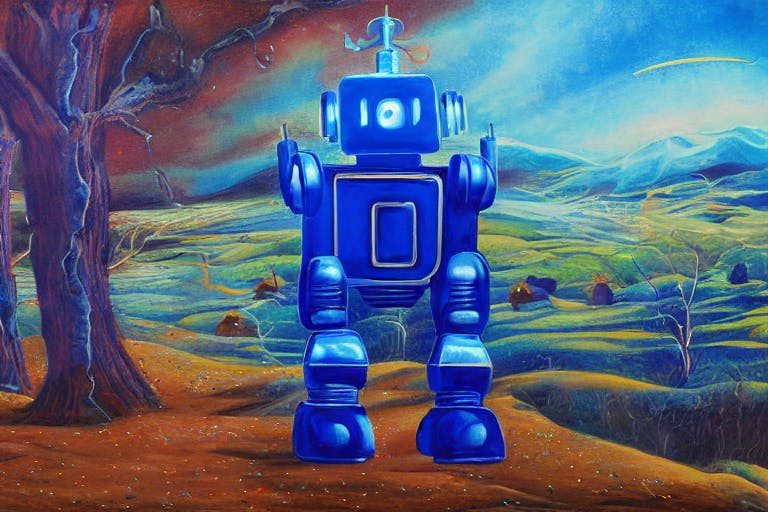
Every hero needs a sidekick. Make AI yours.
This is a pitch we’re passionate about. We want people to see the potential in collaborating with AI as a way to scale their business. One way we do that here at Bolsteroo, is by providing a way for people to create copy up to 10x faster than average. A business can’t exist online without copy. But, as with anything new and life-altering, many wonder about the ethical implications of using AI to create content. This raises some key questions:
Where does artificial intelligence get its data from?
Can learning about the sources and processes of training AI be the bridge between humans and robots?
Is there a path forward where co-creating with AI can be considered ethical?
Let’s talk about it.
There are many forms of artificial intelligence, and each one requires data in order to function. In some cases, AI systems are able to create their own data through trial and error. However, the majority of AI systems rely on data that is created by humans. This data can come from a variety of sources, including but not limited to: images, text, sensor data, and video. The data that is used to train AI systems is often referred to as “training data.”
Collecting Data For AI
Artificial intelligence is only as good as the data it’s given. In order to create effective AI, data must be collected from a variety of sources. This data is then used to train the AI so that it can learn to recognize patterns and make predictions.
There are a number of ways to collect data for AI. One is to purchase data from commercial data providers. This data is typically clean and well-organized, making it ideal for training AI. However, it can be expensive to purchase data in this way.
Another option is to collect data yourself. This can be done by scraping data from websites or using sensors to collect data from the physical world. This data is often messier and more difficult to work with, but it can be much cheaper than purchasing data.
Once data is collected, it must be cleansed and organized before it can be used to train AI. This process can be time-consuming and difficult, but it’s essential for creating effective AI.
Data is the foundation of artificial intelligence. Without data, AI would not be possible. Collecting data is therefore a critical part of creating AI systems.
The Different Types Of Data AI Uses
AI gets its data from a variety of sources, including sensors, images, video, text, and speech.
Sensor data includes data from devices that measure physical phenomena, such as temperature, pressure, or sound. Images and video are digital representations of visual information. Text is a common format for storing and transmitting written information, such as articles, books, or web pages. Speech is the vocalized form of human communication.
AI systems can use any or all of these data sources to learn and make predictions. For example, a system that is trained on images of faces might be able to recognize faces in video footage or identify people in a crowd. A system that is trained on speech data might be able to transcribe audio recordings or convert speech to text.
The different types of data that AI uses can be broadly categorized into two types: structured data and unstructured data.
Structured data is data that is organized in a way that computers can easily understand. This includes data that is in a database or spreadsheet, as well as data that has been formatted for machine-reading, such as XML or JSON.
Unstructured data is data that is not organized in a predefined way. This includes data that is in a natural format, such as images, video, or speech. It also includes data that is in an unorganized format, such as text.
AI systems can use a variety of techniques to extract insights from data, including supervised learning, unsupervised learning, and reinforcement learning.
How AI Turns Data Into Insights
Artificial intelligence (AI) has been called the “holy grail” of data science. Where does AI get its data from? In short, from everywhere. AI systems are constantly being fed data from a variety of sources, both internal and external.
Some of the most common sources of data for AI include:
Web data: AI systems can mine data from the web, such as from social media, online forums, and websites.
Sensor data: AI systems can collect data from sensors, such as cameras, microphones, and GPS devices.
Transaction data: AI systems can access transaction data, such as credit card records, medical records, and retail sales data.
Public data: AI systems can also tap into public data sources, such as weather data, census data, and satellite data.
Once it has been collected, this data needs to be “cleaned” before it can be used by an AI system. This process of data cleaning can be time-consuming and complex, as it involves making sure that the data is accurate, consistent, and in the right format.
Once the data is clean, it can be fed into an AI system, where it will be used to train the system and help it to make predictions. The more data an AI system has, the better it will be at making accurate predictions; and these predications become actionable insights that result in saving time and resources, and promoting higher levels of efficiency among people and businesses around the world.
The Benefits Of Using AI
We now have an idea of how artificial intelligence collects its data. It comes from a variety of sources, including humans, sensors, and computers. We’ve also learned that the majority of AI systems rely on data that is created by humans, and that artificial intelligence is only as good as the data it is given. The main benefits of using AI include the ability to make better decisions, improve efficiency, and save time and resources.
So where do we go from here?
AI gives us the power to gather any kind of information we want at the click of a button. Within seconds we are presented with material that can help us create content faster and more efficiently than ever before. However, with change comes apprehension. In the paraphrased words of Dr. Ian Malcolm: Just because we have the power to do something doesn’t mean we should. But as we take a closer look at AI, contemplating the way it will impact our future, will it really change the way we humans have always developed our ideas and inventions? Or will it gift us with what we need to more effectively tap into and utilize the creative parts of our minds, enabling us to do more with what already exists?
AI is swiftly becoming an integral part of our world. The unavoidable next step is learning how to co-exist with it in way that serves our progress as a society. But how will this next step play out? At this point in time the answer can’t be known, it can only be lived.